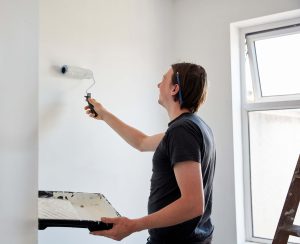

Many people wonder why it’s necessary or important to apply primer before painting a wall. Is the time and expense really worth it? If it’s your first time painting, you might not even be aware of exactly what primer is. You can think of primer as a first coat of paint, but it’s more than that. It provides the base upon which the actual paint will be applied. In this article, we’ll discuss why that step is an important part of a good paint job.
Paint Adhesion
Paint that’s not applied to a properly prepared surface won’t stick very well or for very long. You’ve likely already read about the importance of thoroughly cleaning the surface with TSP or some other cleaner to remove dirt and oil that might prevent proper bonding.
While that step is important even with primer, a good primer is more resilient to such issues than paint is. Additionally, paint adheres very well to primer. Therefore, using primer as an intermediary layer between the bare, cleaned wall and the paint will improve the bonding process. This means that your paint will be less likely to peel or chip years down the road.
Color Trueness and Consistency
Changing the color of the room can cause some problems without primer. Imagine you have a dark-colored room that you now want to paint with a lighter color. The darker color will bleed through into the new paint, resulting in a different color than you were expecting. This is true of every color and shade of paint.
Primer’s thickness and design are great at resisting this type of change, and its white color provides the most neutral base possible for applying a new paint job. This ensures that your color is as accurate as possible to the paint swatch you liked at the store.
Similarly, primer can hide stains in the old paint, which might otherwise eventually seep through the new coat of paint and become just as visible and unsightly as they were before you painted in the first place.
Economical Benefits
As you may be able to imagine, the benefits we’ve seen from using primer extend into the economics of painting. While primer might seem like an expensive and unnecessary step, it reduces the number of coats that you’ll need to get the shade you want and extends the lifetime of the paint job. This dual benefit reduces the upfront expense of the primer and increases the long-term value of the paint job.
Time is money, and by the same logic, primer can save you time. A coat of primer takes the same amount of time as an extra coat of paint. Removing the requirement for the extra coat eliminates the extra time taken for the primer. Extending the life of the paint job saves you from having to perform the whole task again sooner than would otherwise be necessary.
Specialized Primers
For every benefit we’ve listed, there are specialized primers that might address the problem more completely. Some materials, for instance, are not great for paint adherence. Specialized primers are designed to better stick to those materials. Other primers are mold and mildew-resistant for areas where that may be a problem. Some are rust-resistant for painting on metal. Others are extra thick to ensure complete coverage of troublesome stains or minor surface imperfections.
Get Your Paint Supplies at Builders
The paint shop at your local Builders has all the supplies you’ll need to apply a top-quality layer of primary and cover it with a beautiful paint job that will transform your room. If you have any questions about which primer might be best for your needs or what supplies you’ll need to complete the job, be sure to ask one of our friendly staff members for help.