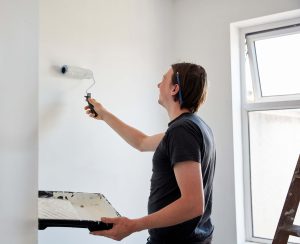

Painting is a great way to refresh any room in your home, and it’s a manageable DIY project even if you’re not an expert. These tips will help you get beautiful results.
1. Pick a color
Paint is available in any color you can mix, so make sure you have at least some direction before you head to the store. Look for items from the room to bring with you to match with swatches, like an accent pillow or small painting. Use those colors as a starting point. You can also think about the mood you’re trying to create in a particular room. Warm colors tend to create a cozy vibe and prompt you to be more social, while cool tones are more soothing.
2. Choose the right paint
High-quality paint is worth the splurge. It looks beautiful and usually does a better job of standing up to scuffs and stains once you’re done. Premium brands offer options like Valspar’s Paint + Primer, which lets you skip the primer step while still getting an even and opaque result.
3. Prepare your space
Clear as much out of the room you’ll be painting in as possible. This gives you space to work and reduces the potential for stains in case of a spill. Make sure to remove anything hanging on the walls like towel hooks, pictures, or light switch covers as well. Run painter’s tape around any windows or door trim to protect them.
4. Keep your paint mixed
You can either use an attachment on a power drill or a wooden stirrer to mix your paint. Unless it was mixed at the store right before you started working, you’ll need to stir it to make sure you get an even color. If you take a long break or paint over multiple days, make sure to mix again before you get back to painting.
5. Use a cotton drop cloth
Dripping some paint on the floor is inevitable, so make sure to put down a drop cloth to protect your carpet. Plastic sheets are also an option, but they’re better for covering furniture. A cotton drop cloth absorbs any paint you spill so you’re less likely to step in it and leave paint tracks around your house. It also reduces the risk of slipping by giving you a studier place to stand.
6. Use the right-sized rollers
You’ll want a smaller tool to paint edges and along trim. Instead of using a paintbrush, get a three-inch paint roller so your edges will have the same paint texture as the rest of the walls. For larger spaces, you’ll want a wider roller. The standard size is nine inches, and 12 and 18-inch rollers are also available. While the larger sizes can be a bit unwieldy, they can also help you save time if you’re painting a larger wall.
7. Work to a wet edge
This painting technique makes sure you get an even finish. Paint up and down the same strip of wall, and overlap each stroke with the previous stroke so you’re going over wet paint instead of dry paint. Plan to paint the entire wall in one session, and keep your paint roller saturated.
8. Remove painter’s tape carefully
Don’t ruin your hard work by pulling off dried paint along with your painter’s tape. Either remove the tape before the paint has fully dried or run a box cutter or similar tool along the edge after at least 24 hours of drying time.
Builders Kearney has an extensive paint selection and all the other materials you need for your home improvement project. Visit our website to learn more!